
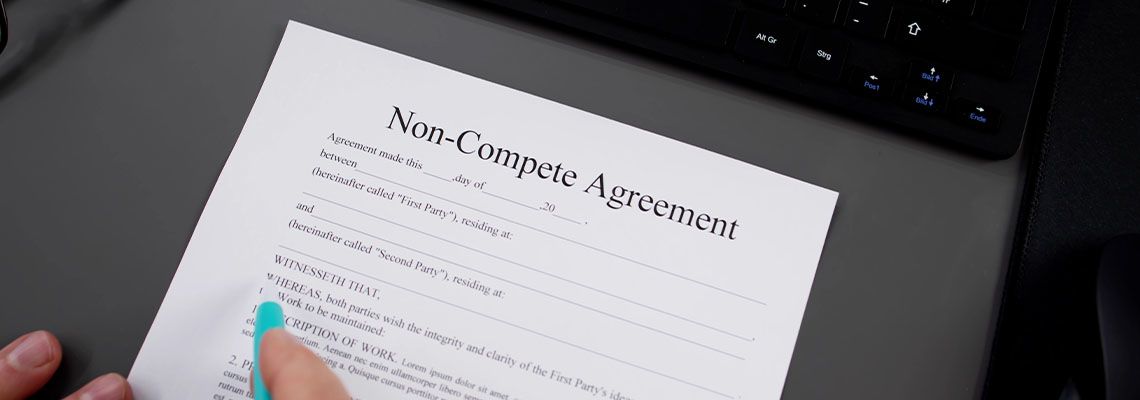
Key Components of a Successful Non-Compete Agreement
Non-compete agreements are a vital tool for businesses to protect their interests and maintain competitive advantages in their chosen markets. These contracts, often drafted with the help of a business litigation attorney, restrict employees from working with direct competitors or from starting a competing business for a set period after leaving an employer.
For employers and employees alike, having clear, enforceable non-compete clauses is essential. With offices in San Jose, Morgan Hill, and Fremont, California, the Law Offices of Steven E. Springer can help you craft effective non-compete agreements that serve your business goals and preserve your employees' ability to find employment.
Attorney Springer is dedicated to helping you explore the key components that make non-compete agreements successful and legally enforceable in California. Reach out today to schedule a free, 20-minute consultation.
1. Define the Scope of the Restricted Activities
The most critical element of a non-compete agreement is specifying exactly what activities are restricted. Vague or overly broad language risks invalidating the entire contract.
Describe the prohibited work: Specify the types of roles or job functions the employee is barred from taking with competitors.
Identify industries or markets: Outline which industries or markets the restriction applies to.
Include geographical limits: Define the physical area where the employee is restricted from competing.
Mention indirect competition: Clarify whether working with suppliers, customers, or partners of competitors is restricted.
By narrowing the scope, you can make the agreement fair and tailored to protect your legitimate business interests without unnecessarily restricting your employee’s opportunities.
2. Set a Reasonable Duration for the Restriction
How long a non-compete agreement lasts is often a decisive factor in whether a court will uphold it. The duration must be appropriate to the nature of the business and the employee’s role.
Match the duration to your business needs: Shorter restrictions might be enough for fast-moving industries, while longer ones may fit traditional sectors.
Avoid excessive time frames: The courts typically view overly long restrictions skeptically.
Consider industry standards: Use common practice within your field as a guideline.
Allow flexibility when appropriate: In some cases, you can tailor the duration based on seniority or access to sensitive information.
Include a clear start date: Specify when the non-compete period begins, usually upon employment termination.
By balancing protection with fairness, your business can maintain an enforceable agreement and reduce future legal challenges.
3. Detail the Geographical Boundaries
Geographical limitations in a non-compete agreement define where the employee can’t compete. These boundaries must be reasonable and tied to the company’s actual business reach.
Define specific regions or territories: This can range from a city to multiple states or even international areas.
Avoid overly broad areas: Restricting competition in areas where your company doesn’t operate weakens enforceability.
Consider market impact: Focus on areas where competition would realistically harm your business.
Include methods for updating: As the business expands or contracts, you may want to revisit the geographic scope.
Address remote or online work: Clarify whether virtual or online business activities are subject to the restriction.
Geographic limits that are too broad or vague are likely to be rejected by the court. Instead, clarity can better protect both parties.
4. Specify the Considerations Provided to the Employee
For a non-compete agreement to be valid, the employee must receive something of value in exchange for agreeing to the restrictions. This is called consideration.
Offer initial employment: Starting a new job can serve as a form of consideration.
Provide additional compensation: Bonuses, raises, or special benefits can count.
Include continued employment: For existing employees, ongoing employment can be considered if the agreement is signed later.
Outline benefits or perks: Access to proprietary training or confidential information may justify the agreement.
Document the exchange clearly: Make sure the consideration is clearly stated in the contract.
An experienced business litigation attorney can help craft this section to avoid disputes over whether the employee received fair value.
5. Include a Confidentiality Clause
Protecting sensitive business information often goes hand in hand with non-compete agreements. Including a confidentiality clause prevents employees from sharing trade secrets or proprietary data.
Define confidential information: Specify what types of data or knowledge must remain private.
Cover customer lists and pricing: These are common trade secrets.
Restrict use during and after employment: Clarify the employee’s obligations regarding confidential material.
State the duration of confidentiality: Often longer than the non-compete period.
Specify remedies for breaches: Outline consequences if confidentiality is violated.
6. Address the Consequences of Violating the Agreement
Clearly outlining the repercussions of breaking the non-compete helps deter violations and provides grounds for enforcement.
State potential legal action: Injunctions or lawsuits to stop the employee.
Specify damages or penalties: Financial compensation for losses caused.
Include indemnification: Employees may be responsible for legal fees if they breach the contract.
Outline dispute resolution processes: Mediation or arbitration before litigation.
Clarify how violations are determined: Evidence and procedures used to prove a breach.
Explicit consequences increase the seriousness of the agreement and can help your company respond swiftly if needed.
7. Set Clear Definitions and Terms
Using precise definitions reduces misunderstandings and disputes over the agreement’s meaning. The terms you should consider expanding on include:
Define key terms: Such as “Competitor,” “confidential information,” and “restricted activities.”
Explain legal terminology: Make the agreement accessible and clear.
Use consistent language: Avoid synonyms that might confuse interpretation.
Include references to applicable laws, including California statutes governing non-competes.
Address employment status: Define “termination” and related terms affecting the agreement.
Clear terms make it easier to enforce non-compete clauses and demonstrate fairness to employees. An experienced business law attorney can help you draft clearly defined contracts.
8. Avoid Overly Restrictive/Unfair Terms
Non-compete agreements must balance protecting your business without imposing undue hardship on employees. California courts will carefully scrutinize unfair clauses.
Keep restrictions reasonable in time and place: Avoid indefinite or statewide bans without justification.
Don’t restrict unrelated job roles: Limit the scope to relevant positions.
Avoid broad non-solicitation clauses: These can be challenged if too vague.
Limit penalties to proportionate damages: Don’t threaten excessive fines.
Be transparent about terms: Allow employees to ask questions and seek counsel.
Fair agreements are more likely to be upheld and less likely to cause disputes.
9. Regularly Review and Update Your Agreements
Businesses evolve, and so do laws, which is why an experienced business litigation attorney should be consulted. Regularly revisiting your non-compete agreements keeps them current and effective.
Assess for legal changes: California courts and legislation change frequently.
Update terms with business growth: Adjust the geographic or activity scope as needed.
Reflect new business models: Include considerations for online or remote work.
Train HR and managers: Train on how to present and enforce agreements.
Re-sign or reaffirm agreements: This is important when significant changes occur.
Ongoing review prevents surprises and keeps your agreements enforceable. If you need assistance drafting a clear and effective non-compete clause, contact an experienced attorney today.
How an Attorney Can Help
Drafting and enforcing non-compete agreements demands legal knowledge. At the Law Offices of Steven E. Springer, Attorney Spinger provides the following services:
Drafting clear and enforceable contracts: Customizing agreements to your business needs.
Advising on California law limitations: Helping you avoid unenforceable clauses.
Representing you in disputes: Defending your rights in court if violations occur.
Negotiating settlements: Avoiding costly litigation where possible.
Providing strategic guidance: Informing your business on how non-compete agreements fit within your broader business plans.
Working with Attorney Steven E. Springer means partnering with a lawyer experienced in business litigation and California employment law, providing your company with solid protection.
Contact The Law Offices of Steven E. Springer Today
A business litigation attorney plays a vital role in protecting business interests. Crafting these agreements carefully, with clear scope, reasonable limits, and proper legal language, makes them more likely to hold up if challenged.
With offices in San Jose, Morgan Hill, and Fremont, California, the Law Offices of Steven E. Springer serves clients throughout Santa Clara County. Reach out today to schedule a free, 20-minute consultation and explore how Attorney Springer can help you create and enforce non-competes that protect your company and uphold your employees' rights.